‘Give yourself the opportunity of silence, and begin to develop your listening, in order to hear, deep within yourself, the music of your own spirit’. John O’Donohue
How we work together
IBT allows space and time for babies and children express their early memories through baby body language and crying. Together we become curious, like detectives. We work out where and when your baby/child became overwhelmed. I may use gentle craniosacral touch to release physical tension. When a baby/child knows that their story has been heard by their parents, they can release the emotional and physical trauma that goes with the story. This can support them to self-regulate and self soothe more easily.Craniosacral Therapy (CST) & Pre and Perinatal experience for Adults
Would you like to:
- feel more vibrant and resilient no matter what is going on in your life?
- become more flexible, spontaneous and joyous?
- re-gain physical strength after an injury, illness or surgery?
- help ease back pain and migraines?
- have better movement and better cognition if you have a degenerative disease?
- sleep better?
- embrace the menopause and the next stage of life?
- release grief in a gentle, peaceful way?
- look after your health without the use of drugs or surgery if at all possible?
‘The Body Keeps the Score‘ Bessel Van der Kolk
Persistent pain, anxiety, depression and overwhelm and can drag us down and stop us from leading the life we deserve. My question is, ‘What was your earliest trauma?’ ‘Just how long have those patterns been there?’ ‘What is actually causing your life long pain?’ ‘Would you like to understand what was happening for you in the womb and during your birth process and how this is related to your current issues?’
Working with me to release life long held emotional stress and physical tension in the body can regulate your nervous system and help you reclaim your life force.
How we work together
CST is a gentle, hands on, non-invasive therapy which uses the body’s own self-healing capacity to release physical and emotional trauma. Pre and perinatal experience work uses gentle enquiry, an awareness of client’s body language and use of words. I combine both therapies to offer a safe
How can Craniosacral Therapy (CST) help you become your resilient, authentic self?
Our natural state of being rests in vitality and health, but from an early age, adverse life events happen, with physical injury and emotional pain getting trapped in our bodies. As a coping mechanism, we bury deep within ourselves overwhelming events that we can’t process in that moment. Over time, we become experts in repressing our emotions in order to carry on with our busy lives. Repression is an effective strategy, as long we have the resources to manage it. Symptoms develop when our body is no longer willing or able to maintain these repressed emotions. Further life events happen – pregnancy, injury, bereavement, a new job – all at once, physical and emotional symptoms become impossible to suppress and ignore.
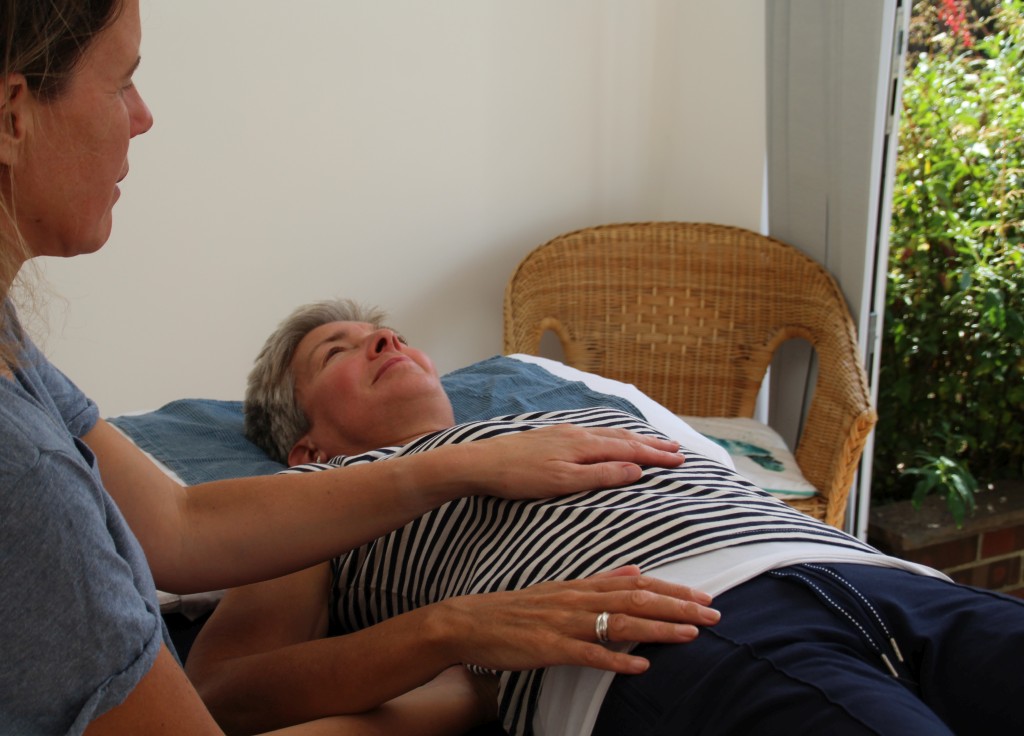
In order to regain our vitality and health, our body needs safety, space and stillness. Clients can often enter into deep relaxation on the treatment table, maybe for the first time in a long time. They may see an image, have a flash back, or be aware of a sensation. With a CST therapist’s intuitive touch and deep listening, clients may be able to feel where the emotional pain is stuck in the body. Acknowledgement encourages the pain to ease or release over time.
If there is a physical injury, there is likely to be a repressed emotional memory attached to the pain. There may also be structural damage. The area may be tense and stagnant. With a gentle hand; tension patterns in the membranes and connective tissues that support the muscles, blood vessels, nerves and organs begin to release. Better fluid flow improves nutrition and waste removal at a cellular level, which leads to improved physical function. This increases energy flow throughout the body, which helps us to feel more emotionally and physically resilient over time.
Where does CST originate from?
CST is based on the work of an American osteopath, Dr William Garner Sutherland (1873-1954), who developed an approach to osteopathy known as the ‘Cranial Concept’. From a lifetime of experience with patients, Dr Sutherland recognised the inherent life force of the body which he called ‘The Breath of Life’ that was constantly re-organising and restoring the mind and body back to health.
Dr Sutherland discovered that the ‘Breath of Life’ expressed itself as subtle layers of impulses within the body that felt like a tide-like rhythm throughout each of the body’s systems. He realised that each body system registered the presence of this life impulse with its own unique form of motion. Dr Sutherland concluded that if a person’s health was compromised in any way, it was sensed in subtle differences to the natural expression of these tide-like motions, and the body’s ability to self-correct and heal would be compromised. He began to experiment with stillness, deep listening, intention and presence and found that the less he did, the better the result; that with the right circumstances, the body would heal itself. After he died, his life affirming work was continued by his students, and Craniosacral Therapy came into being.
What is the role of the therapist?
It is my role to create a safe, quiet space and act as a facilitator for your body’s self-healing process. All work is permission based.
Is Craniosacral Therapy suitable for me?
Craniosacral Therapy involves no manipulation and is directed by the client’s body and its needs. It is safe and suitable for people of all ages, from newborn babies to the elderly and can be used throughout pregnancy. My personal and professional experience is that Craniosacral Therapy can often be effective in situations where medical intervention hasn’t been able to improve a specific condition any further. However, please seek a medical opinion in the first instance. It always works alongside, and does not replace, medical advice.
What happens during a treatment?
I offer a 20 minute free telephone conversation so that you work decide whether the therapy will suit your needs. You can tell me what’s been happening for you & I explain about the therapy, how I work and answer any questions you may have. At the initial consultation I will take a case history and there will be a short treatment. In subsequent treatments, we will check in and the CST treatment will last for about 45 minutes. During the treatment, you remain fully clothed at all times and lie face up or on your side on a treatment table, or you may be seated. Sometimes we work on a futon if that is more comfortable. With permission, I may make light, gentle contact with your head, your spine, your pelvis or your limbs. You could feel heat, tingling, swirling, and other sensations as changes occur. Everyone’s experience is different and varies from session to session.
How should I take care of myself after a treatment?
There may be a period of adjustment as part of the healing process; this is normal. Like the treatment itself, it varies from client to client. Words that clients have used after a treatment include: ‘Able to cope better’, ‘A sense of wellbeing’, ‘Clear headed’, ‘Connected’, ‘Feeling more present and alive’, ‘Feeling whole again’, ‘In less pain’, ‘Pain has gone’ ‘Pain has never come back’. Clients may also feel tired and emotional. CST can exacerbate symptoms in the short term while they are being integrated. Your body will carry on processing after the treatment has ended. If you can, plan your treatments so that you can have a quiet day afterwards and an early night. Also, drink plenty of water for hydration.
How many treatments will I need?
I ask you to commit to 4 treatments in the first instance. Some clients come for 4 treatments and their immediate issue is resolved. Others need more sessions for more longer standing health conditions. Clients often find when they have regular CST treatments, life still happens but they are able to maintain their physical and emotional resilience.